A Calm Cupboard Reset Before the Change of Season
A seasonal cupboard reset helps you sort what you use, spot troublesome duplicates, and make everyday items easier to reach without buying new storage.
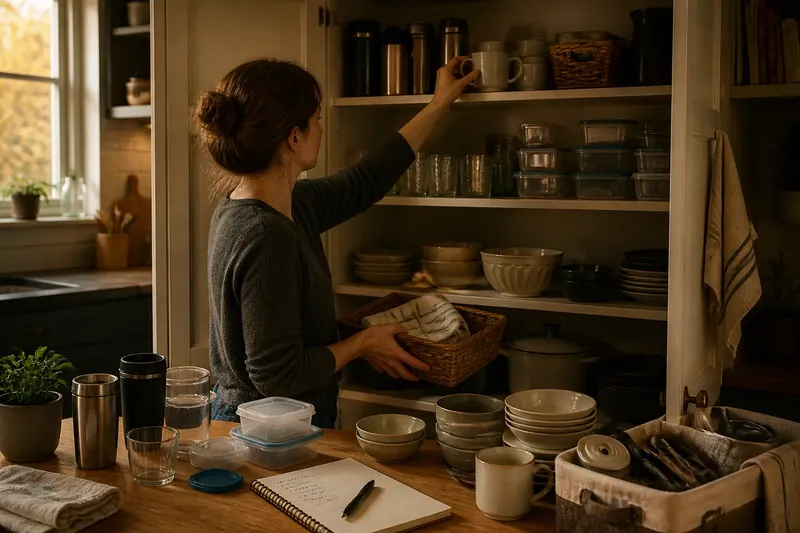
The most common mistake in a seasonal cupboard reset is emptying the whole cupboard at once. Dinner still needs making, the counter fills up, and everything goes back wherever it fits. Work on one shelf or one small group instead, so you can finish the job and make everyday items easier to find.
Choose one cupboard and define what done means
Pick a cupboard with a clear seasonal connection, such as the one holding mugs, lunch containers, baking tools, or picnic supplies. Leave the other cabinets alone. A bounded task is easier to complete and less likely to disrupt the kitchen.
Decide what a useful result looks like before you begin. Perhaps the door closes easily, daily items are within reach, and you can identify anything you no longer need. The goal is not a shop display; it is a cupboard that supports ordinary routines.
Clear a patch of counter or table for sorting, and keep a cloth nearby for crumbs and dust. If others share the cupboard, ask what they use before moving unfamiliar items. Their habits may change where things belong.
Notice how the cupboard works before rearranging it
Open the door and look for everyday friction. Which items do you reach for without searching? What gets blocked behind something else? Do objects often end up on the counter because putting them away is awkward? These clues help you organize around actual use.
Notice the cupboard’s shape and surroundings. A tall shelf may suit a pitcher, while a low shelf is often a more comfortable place for heavy cookware. A door, appliance, or neighboring shelf may limit access. You are working with the space you have, not planning a renovation.
Write a few plain reminders on paper or in your phone, such as “lids hard to match” or “serving bowl used in warm weather.” Treat them as notes about problems to solve, not a scorecard for tidiness.
Group items by the job they do
Take out one shelf or a small group at a time. Gather objects with similar uses, such as drinking glasses, food containers, baking utensils, or serving dishes. This makes duplicates visible and helps you notice whether a group belongs in this cupboard.
Keep categories broad enough to be useful. Separating every spoon by shape may add work if you reach for them in the same way. It can be helpful, though, to keep lunch containers apart from serving bowls when one group is used daily and the other mainly for gatherings.
Look at each object on its own. A matching set is not automatically more useful than pieces that suit your routine. A chipped mug might be useful for a plant cutting, but an imagined future purpose should not earn it permanent cupboard space.
Compare duplicates by condition and convenience
Duplicates are not clutter by default. Several water bottles may suit a household that packs lunches, while spare serving spoons may sit untouched. Ask whether the number you own fits how you cook, eat, host, and clean up.
Gather items with the same job and compare how easy they are to use. You might prefer one can opener because its handle is comfortable, or keep a second measuring cup with a separate baking kit. Keep extras with a clear role; consider passing along usable ones that make searching or stacking harder.
Say you find four travel mugs and usually pack one for a weekday commute. You check each lid, choose the mug that fits your bag and is easiest to clean, and keep a second as a backup. You move the other two out of the everyday group. The result should be a clearer spot for the mug you reach for, with a spare still available.
Put everyday and seasonal items where they work best
Arrange items by how often and how safely you use them, rather than following a universal organizing rule. Frequently used cups and dishes generally belong within easy reach. A heavy serving platter may be safer on a lower shelf than above shoulder height, especially if you lift it while carrying food.
Keep related everyday items together where that supports a task. Tea, a usual mug, and a spoon can sit near one another if the arrangement does not crowd out other people’s routines. Baking tools may make sense as a group if you use them together.
Seasonal items can stay in the same cupboard if they fit without blocking daily objects. A picnic thermos or holiday serving bowl might go toward the back or on a higher shelf that you can reach safely. Choose a place you will remember when the season returns.
Check condition before deciding what stays
Look for wear that affects whether an item is useful: loose handles, cracked containers, lids that no longer fit, rust, or surfaces that are difficult to clean. Set questionable objects aside while you decide whether repair, another practical use, or disposal makes sense.
Base the decision on a real need rather than a vague intention. If you have not used a specialty tool, ask whether a specific upcoming task calls for it and whether another object already does the job. A clean, usable item may be passed along; follow local disposal guidance for items that cannot be reused.
For objects that touch food, follow the maker’s care information if damage raises questions about safe use. Do not keep an unsafe or unsanitary item just to preserve a set. Ask a qualified professional when you need advice about a specific health or safety concern.
Reuse storage you already own
Before buying a bin, turntable, or divider, try removing unnecessary items or changing their arrangement. A sturdy shoebox, clean basket, or small tray already in the house may gather related objects without adding another purchase. Check that it fits the shelf and does not hide or obstruct what you need.
A container helps when it solves a particular nuisance. A shallow tray might keep tea supplies together; an existing basket could corral napkins. If a container hides contents, takes up too much room, or is awkward to pull out, it is probably adding work.
Try the arrangement with the cupboard door open and closed. Make sure shelves remain stable, handles and lids do not snag, and everyone who needs the items can reach them. Keep heavy objects low rather than stacking a precarious tower for the sake of appearance.
Review the arrangement after ordinary use
A reset is not finished just because the cupboard looks neat. Notice how it works during breakfast, cooking, and cleanup. If an item repeatedly migrates to the counter or a group is hard to put away, make a small adjustment.
Move lunch containers closer to the front if you use them often. Shift a serving bowl if it blocks the mugs. Cupboard arrangements can change as meals, weather, and household routines change.
When another seasonal shift comes around, begin with what you actually used. Keep the parts that work and adjust the ones that cause friction, so the cupboard holds what your household reaches for rather than every object that might someday be useful.
What should you do with seasonal cupboard items?
How do I decide whether to keep a duplicate?
Keep a duplicate when it serves a clear role, such as a useful backup while another item is being washed. If extras are hard to store and rarely chosen, pass along usable ones or dispose of them appropriately.
Should seasonal dishes go somewhere else?
Not necessarily. They can stay in the same cupboard if they fit without blocking daily items, but they may belong on a less accessible shelf. Choose a location you can reach safely and remember when the season returns.
Do I need matching containers to make a cupboard orderly?
No. Matching containers can look consistent, but the cupboard can work well with what you already own—or with no containers at all. Use a basket or tray only if it makes a particular group easier to find and put away.
How often should I reset one cupboard?
There is no fixed schedule that suits every household. Revisit it when a seasonal change affects what you use, or when searching and putting things away have become noticeably awkward.