Wood, Bamboo or Plastic: What a Cutting Board Material Changes
Wood, bamboo or plastic cutting board choices affect grip, weight, cleanup and wear; match the board to your cooking routine, knife habits and sink.
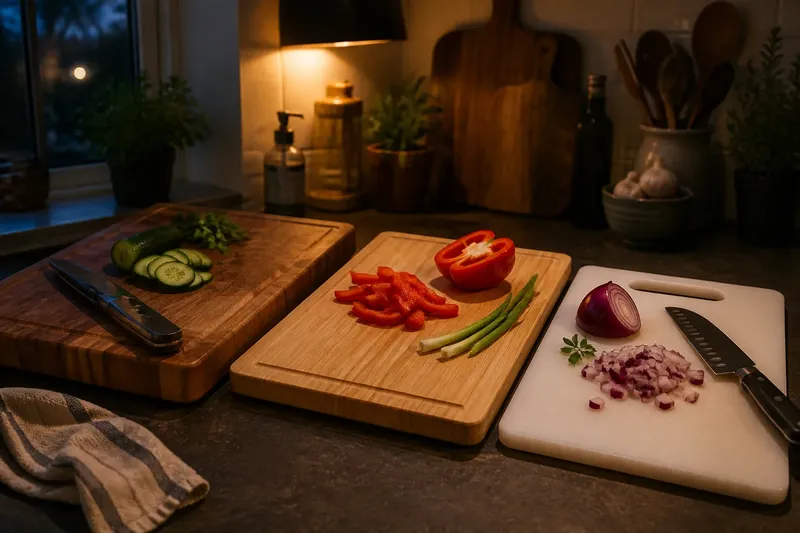
The common mistake with a cutting board is choosing by appearance alone, then discovering that a heavy slab is awkward to wash or a light one skates across the counter. Wood, bamboo or plastic cutting board materials change how a board feels under a knife, how it moves during prep and what care it asks of you. The right choice depends less on a universal ranking than on what you chop, where you store the board and how you clean it.
Material changes the feel of every cut
A knife meets more than food on a cutting board. The board’s surface gives slightly, stays firm, or feels slick beneath the blade. Those differences can make prep feel pleasant and controlled—or tiring and fussy—especially when you cook often.
Wood usually feels warm and somewhat forgiving. Its surface has a little give, which many cooks enjoy when slicing vegetables or breaking down herbs. Hardwoods such as maple and walnut are common choices; grain, finish and construction vary, so boards made from the same species can still feel different.
Bamboo is technically a grass, but it is sold and used as a board material alongside wood. It often feels firm and dense. That can suit someone who likes a crisp, stable cutting surface, while a cook who prefers a softer-feeling board may find it less comfortable. Bamboo boards are built from joined strips, so seams and finish are part of the surface to inspect.
Plastic boards tend to feel lighter and more uniform. They are easy to move between the counter and sink, and their surface often feels less warm than wood. A textured or worn board may feel different from a smooth new one, so the material name alone does not describe every knife interaction.
Weight and grip shape where a board fits
A board that stays planted can make chopping feel more settled. A heavier wood board often resists sliding simply because it has more mass, though its weight can make it cumbersome to lift, rinse or store upright. A larger board also needs a place to live when the counter is crowded.
Bamboo boards can be substantial too, but their weight varies with thickness and construction. Plastic boards are often easier to carry with one hand, a practical detail when moving scraps to a compost bin or rinsing between tasks. Lightweight boards can shift on a smooth counter, so a damp dish towel underneath can add grip without changing the board itself.
Think about the whole path from cupboard to counter to sink. Imagine you cook in a small apartment and keep the board in a narrow cabinet beside the sink. A slim plastic board may be easier to pull out and wash, while a broad wood board may feel nicer for longer prep but be awkward to store; choosing the smaller board could mean less setup friction and more counter space left clear.
Upkeep depends on the material and the routine
Plastic is generally straightforward to rinse and wash. Some plastic boards are dishwasher-safe, but that depends on the particular product and its care label. Knives can leave grooves over time; deep, difficult-to-clean damage is a reason to retire a board rather than keep using it.
Wood usually asks for gentler care. Prompt washing, thorough drying and avoiding prolonged soaking help limit warping and cracking. Some boards benefit from food-safe mineral oil or a board conditioner to keep the surface from drying out. Follow the maker’s care directions, and avoid assuming that every finish or construction responds the same way.
Bamboo needs attention to moisture too. Wash it by hand unless its instructions say otherwise, then dry it well rather than leaving it in a wet sink. Its joined construction makes standing water and neglected dampness particularly unhelpful. A clean, dry storage spot matters more than an elaborate maintenance ritual.
For food safety, keep a clean board for ready-to-eat foods and avoid letting raw meat juices transfer to foods that will not be cooked. Use separate boards or wash the surface and utensils thoroughly between tasks. If a board’s material or care label raises a specific question, follow the manufacturer’s instructions and local food-safety guidance.
Which board material suits your cooking habits?
- Choose wood if you value a warm, steady-feeling surface and are willing to wash and dry it carefully.
- Consider bamboo if you like a firm board and want a natural-looking surface, while accepting that it still needs moisture-conscious care.
- Choose plastic if easy handling and simple washing matter most, and you are comfortable replacing a board when its surface becomes deeply scored.
- Keep more than one board if you regularly switch between raw ingredients and ready-to-eat foods, or want a smaller board for quick jobs alongside a larger prep surface.
- Check storage before buying if the board must fit a drawer, shelf or narrow counter gap; a material you enjoy using is no help if it is too awkward to reach.
There is no need to make one board serve every task. A small plastic board can handle a quick snack, while a larger wood board stays out for a longer session. That pairing can make sense for someone who likes wood’s cutting feel but prefers a lighter surface for frequent rinsing.
What do cooks often ask about board materials?
Is wood or plastic easier on knives?
Many cooks prefer wood’s slightly yielding feel, while plastic offers a more uniform surface. Actual wear depends on the board’s condition, the knife and how it is used, so keep blades sharp and replace boards whose damage interferes with clean use.
Is bamboo better than wood?
Neither is automatically better: bamboo commonly feels firmer, while wood often feels warmer and more yielding. Choose by the surface you prefer and the care you are prepared to give it.
Can a cutting board go in the dishwasher?
Some plastic boards are labeled dishwasher-safe, but wood and bamboo boards commonly call for hand washing. Check the board’s own instructions rather than judging by appearance.
When should I replace a cutting board?
Consider replacing a board when deep grooves, cracks, splinters or persistent damage make it difficult to clean or comfortable to use. A few surface marks are not the same as damage that traps debris or compromises the board.
Choose for the work you actually do
When comparing wood, bamboo or plastic cutting board options, picture an ordinary week rather than an ideal kitchen. If you prep a lot of produce and enjoy a board that stays put, weight and feel may lead you toward wood or bamboo. If quick washing and easy lifting dominate your routine, plastic may suit you better.
Before buying, lift the board if you can, look closely at its surface and edges, and imagine washing and storing it in your actual kitchen. A board that fits your hands, sink and habits is more likely to stay in use—and that practical fit matters more than choosing a material because it sounds like the best one.